

Blue light-blocking glasses have become extremely popular — marketed as essential for anyone spending long hours on computers, mobiles, or tablets. Ads promise protection from eye strain, headaches, sleep issues, and even long-term eye diseases.
But does science actually support these claims?
As an ophthalmologist, here is the latest evidence-based update (2024–25).
What Exactly Is Blue Light?
Blue light (400–490 nm) is part of visible light — not inherently harmful. Digital screens emit only a tiny fraction of the blue light we get naturally from sunlight.
In fact, sunlight gives 100–1000 times more blue light than screens.
Is Blue Light From Screens Damaging to the Eyes?
Answer: NO
No evidence of retinal damage
Large studies consistently show:
- Computer screens emit no UVA or UVB radiation (the harmful spectrum).
- Screen-emitted blue light is too low in intensity to cause retinal damage in humans.
- No link to macular degeneration, cataract progression, or blindness.
Latest reviews (2023–2024):
- Ophthalmic & Physiological Optics (2023): “No measurable retinal damage from digital-device light exposure.”
- Cochrane Review 2023: “No evidence that blue-blocking lenses protect the eye.”
Conclusion: Blue light does not harm the retina.
Do Blue Light Glasses Reduce Digital Eye Strain?
Answer: Also NO
Digital eye strain is real — but it comes from behavior, not blue light.
Common causes:
- Reduced blinking → dryness
- Prolonged focusing → accommodative fatigue
- Poor posture, glare, improper screen distance
Cochrane Review 2023 (17 trials, 619 participants):
➡ Blue-blocking glasses did NOT reduce eye strain, headaches, or dryness compared to normal lenses.
American Academy of Ophthalmology (AAO):
➡ Does not recommend blue light-blocking glasses.
So, buying expensive “computer glasses” for strain is unnecessary.
Does Blue Light Affect Sleep?
Answer: YES, but not the eye
This is the only area with real evidence.
Blue light in the evening can:
- Suppress melatonin
- Delay sleep onset
- Affect circadian rhythm
But the source is behavioral, not ocular damage.
Best solutions:
- Avoid screens 2–3 hours before bedtime
- Use “Night Mode / Dark Mode”
- Use warm-toned lighting in the evening
Blue-blocking glasses may help a bit with sleep only if worn at night, but this is a lifestyle choice—not an eye-care necessity.
Should Children Use Blue Light Glasses?
Answer: NO
Kids using screens for online learning or gaming do not need blue-filter glasses.
More important:
- Frequent breaks
- Outdoor time (reduces myopia risk)
- Proper posture
- Limiting screen time before bed
No evidence suggests blue light poses any eye-health risk to children.
What Actually Helps Reduce Digital Eye Strain? (Evidence-Based)
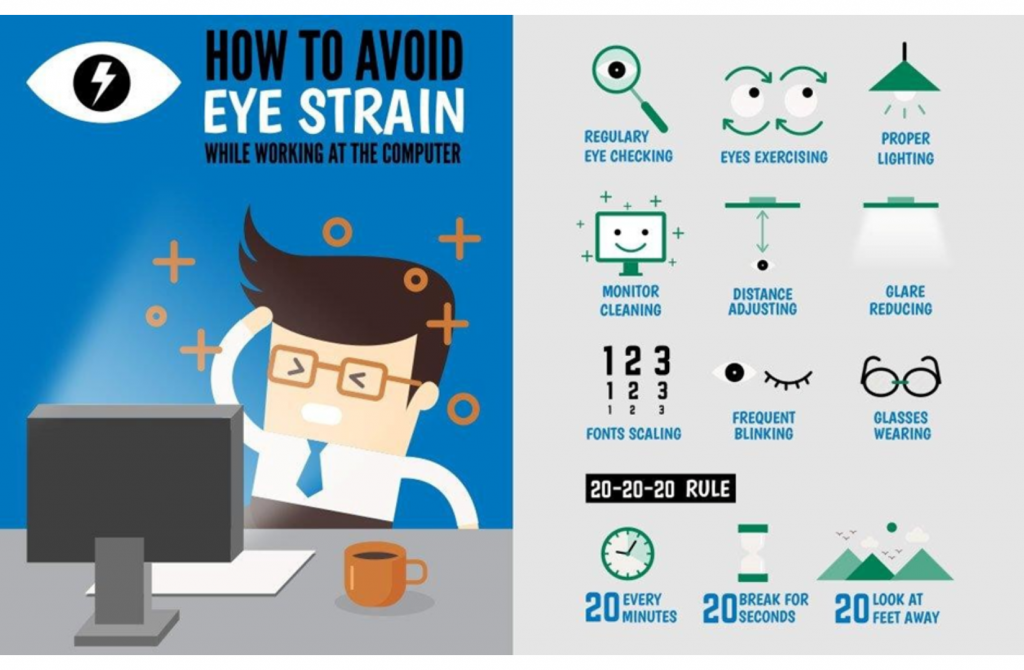
Follow the 20-20-20 Rule
Every 20 minutes, look at something 20 feet away for 20 seconds.
Blink more often
Purposefully blink to avoid dryness during long screen time.
Use artificial tears
Preservative-free lubricating drops reduce dryness significantly.
Correct your ergonomics
- Keep screen an arm’s length (25 inches) away
- Position slightly below eye level
- Reduce glare & increase contrast
Use good ambient lighting
Avoid using screens in dark rooms.
For contact lens users
Switch to glasses during long screen days.
So… Are Blue Light-Blocking Glasses Worth It?
Short answer: ❌ No — not for eye protection or strain.
Long answer:
| Claim | True? | Evidence |
|---|---|---|
| Prevent eye strain | No | Not supported in any RCT |
| Protect retina from damage | No | Screens don’t cause retinal damage |
| Prevent headaches | No | No proven benefit |
| Improve sleep if used at night | Maybe | Mild effect on circadian rhythm |